
Sensory Rooms at Airports: A Small Space That Can Make Travel Possible
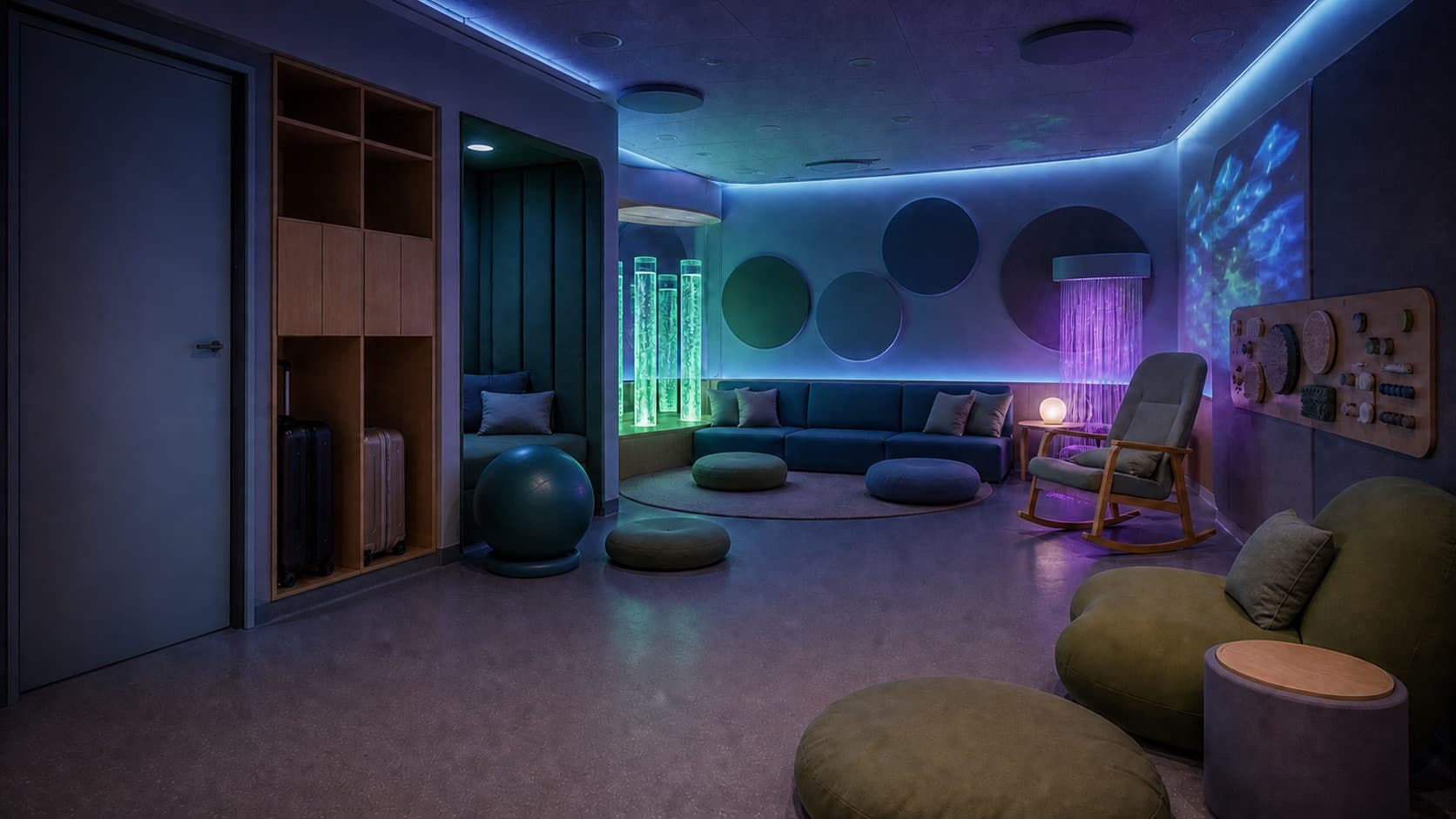
Airports can be exciting, but they can also be intense sensory environments. Crowds, announcements, bright lighting, security procedures, queues and unexpected changes can quickly become overwhelming, particularly for autistic and otherwise neurodivergent travellers.
Research involving autistic-led assessments of six airports identified sensory overload, unclear communication and difficult wayfinding as significant barriers. The researchers recommended measures including quiet or sensory spaces, softer lighting and clearer visual information. Some families avoid flying altogether because of these challenges. (Edwards et al., 2025)
What is an airport sensory room?
A sensory room is a designated space where passengers can step away from the main terminal environment and regulate their sensory experience.
Depending on its design, it may provide:
- Reduced noise and acoustic insulation
- Adjustable or dimmable lighting
- Comfortable seating, beanbags or rocking chairs
- Tactile objects and activity panels
- Calming colours and visual features
- Space for luggage, wheelchairs and accompanying family members
A sensory room should not be designed only as a children's playroom. Neurodivergent adults, people with dementia, passengers experiencing anxiety and others with sensory-processing needs may also benefit.
Dublin Airport, for example, provides bookable sensory rooms in both terminals. Passengers can adjust the rooms from a calming environment to a more interactive one, depending on their needs. Sessions are free and currently available for one travelling party at a time. (Dublin Airport)
How do sensory rooms help families?
The principal benefit is not simply "relaxation." It is giving passengers greater control in an environment where they normally have very little.
A sensory room can allow a child or adult to:
- Recover from noise, crowds and visual stimulation
- Regulate before boarding an aircraft
- Take a break following security or an unexpected disruption
- Use familiar calming strategies in a safer space
- Communicate and process information with less competing stimulation
For parents and caregivers, the room can provide somewhere to pause without feeling watched, judged or pressured to keep moving. This can make the journey more manageable for the whole family.
Research with families at Barcelona Airport found that large noisy spaces, long queues, unfamiliar procedures and difficult wayfinding contributed to anxiety. Sensory or quiet spaces were among the improvements families considered valuable. (Chiscano, 2021)
Not every autistic passenger will need or want a sensory room. It should form part of a wider accessibility journey that includes reliable pre-travel information, trained staff, visual guides, quieter routes and support through security.
What do airports gain?
For airports, a sensory room provides a visible and practical demonstration that accessibility extends beyond mobility-related disabilities.
Potential benefits include:
- A better passenger experience: Passengers have somewhere appropriate to recover from sensory overload.
- Greater confidence in the airport: Families can choose an airport knowing that support is available.
- More inclusive service delivery: One carefully designed space can support people with autism, ADHD, dementia, anxiety and other sensory needs.
- Support for frontline staff: A suitable de-escalation space may reduce pressure on employees when passengers become overwhelmed.
- Accessibility leadership: The facility can support wider accessibility strategies, stakeholder relationships and accreditation efforts.
- Useful service data: Bookings, occupancy and anonymous feedback can help airports understand demand and improve the passenger journey.
Airports Council International describes accessibility as both a societal and business priority. Its accessibility accreditation programme helps airports demonstrate inclusive culture, apply universal-design principles and improve their services. (ACI World)
However, airports should avoid claiming that a sensory room automatically increases passenger revenue. The stronger commercial argument is that it removes a documented barrier to flying, strengthens customer trust and helps an airport serve passengers who might otherwise avoid or limit air travel.
European airports leading the way
Shannon Airport opened Europe's first airport sensory room in 2017. It remains available through the airport's assistance programme and operates 24 hours a day. (Shannon Airport Group)
London Gatwick opened the first airport sensory room in the United Kingdom in 2018. Gatwick was also where the Hidden Disabilities Sunflower initiative began, and it later became the first UK airport to receive ACI Accessibility Enhancement Accreditation. (London Gatwick)
Dublin Airport now has sensory rooms in Terminals 1 and 2, equipped with features such as tactile panels, comfortable seating, interactive boards and calming areas. (Dublin Airport)
The Sunflower and a sensory room perform different roles. The Sunflower discreetly indicates that a passenger may need more time, understanding or support. The airport itself is responsible for commissioning, operating and maintaining its sensory room.
Notable examples outside Europe
Singapore Changi Airport opened its first sensory-friendly Calm Room in Terminal 2's transit area in 2025. Open 24 hours without advance booking, it contains three sensory zones (the Forest, Den and Nest) plus a welcome area. Features include biophilic displays, padded movement spaces, private acoustically dampened rooms and adjustable coloured lighting. The facility is available to all travellers, with priority encouraged for neurodivergent passengers. (Changi Airport)
Pittsburgh International Airport's Presley's Place includes private sound-insulated areas, adjustable lighting, a sensory-friendly restroom and a realistic aircraft cabin where passengers can become familiar with boarding. (Pittsburgh International Airport)
Seattle-Tacoma International Airport has two sensory rooms with dimmable lighting, acoustic panels and different forms of supportive seating. Its original room was developed with input from occupational therapists and the neurodivergent community. (Port of Seattle)
Miami International Airport operates two multi-sensory rooms alongside its rehearsal programme for travellers with disabilities. (Miami International Airport)
Perth Airport developed its sensory-room plans through benchmarking, community consultation, an online survey and a public trial of the proposed layout, an especially useful model for airports considering their first pilot. (ACI World)
Help TravelMaud understand what families need
Have you travelled through an airport as an autistic or neurodivergent passenger, parent or caregiver? TravelMaud is collecting anonymous experiences to understand what makes airport journeys easier, and what still needs to change.